

What this site is
Indie commerce publishers often need to cover unrelated SKU categories to capture enough affiliate volume, but each category has its own spec vocabulary. A multi-SKU network runs every category as its own dataset, so a boot's waterproof rating never pollutes a camera's sensor-size facet.
How the catalog is organized
Each SKU category dataset keeps compare required and its own strict numeric attribute set paired with affiliate CTAs; maps stay off across every category since this is product commerce, not place discovery. A shared homepage surfaces best-selling or featured entities pulled across all loaded categories at once.
Why indie commerce publishers scale this way
A single-category affiliate site tends to plateau once its niche saturates, but a multi-SKU network can add a genuinely new category as a fresh dataset without rebuilding the underlying framework at all. Small teams reuse the same compare UI and CTA pattern across every category they eventually add.
Related surfaces
Composes from hvce site mirrorless camera body matrix, hvce site studio headphone comparison catalog, and hvce site hiking boot comparison hub as three independent SKU categories sharing one domain and brand. See hvce reason ship cheap fast for the real economics of adding one more category.
What ships with every page
Every entity across the network is crawlable HTML with its own metadata, structured data aligned to the visible record, and a clean text twin for answer engines—so multi-niche brands stay organized on one domain and legible for search and AI systems.
Metrics
| Typical Catalog Size | 1,000 entities |
|---|---|
| Profile Depth Score | 4 |
| Facet Dimensions | 8 |
Descriptors
| Primary Monetization | affiliate |
|---|---|
| Discovery Surfaces | compare-heavy |
| Map Suitability | off |
| Compare Suitability | required |
| Delivery Mode | either |
| Buyer Persona | affiliate |
| Overlap Cluster | pro-av |
Frequently asked questions
Do categories share a spec schema?
No—each SKU category keeps its own numeric attributes; only branding and CTA style are shared.
Can one category outgrow the others?
Yes—categories scale independently, so a breakout niche does not require restructuring the whole network.
How is a new category added?
As a new dataset with its own attribute map, then linked in via category chips and a homepage feature slot.
Is a database required to manage this many SKUs?
No—flat JSONL per category keeps the whole network dependency-light regardless of SKU count.
Who runs this build?
Small indie commerce teams and affiliate publishers scaling coverage across unrelated product categories.
Related in this catalog
-

Family travel planning network
A family travel planning network runs kid-friendly attraction and lodging geo directories beside travel-gear affiliate comparison pages under one family-travel brand. HVCE keeps place-specific trip-planning facts separate from product-comparison specs, so parents get both destination guidance and honest gear recommendations from the same trusted domain.
-
Local services lead-gen network
A local services lead-gen network runs several local-service geo directories—HVAC, medical clinics, coworking, marinas—under one lead-generation brand. HVCE keeps each service category as its own dataset with category-specific facets, while the operator shares one lead-routing pattern and one hosting bill across every vertical it serves.
-

Culture-city multi-catalog hub
A culture-city hub runs venue directories, specialized collections, and landmark or heritage reference pages under one brand and one HVCE deployment. Each dataset keeps its own attribute schema and map toggle while the domain shares one sitemap, one semantic manifest, and one licensed installation—so agencies pitch a full cultural network instead of a single-purpose microsite.
-
Outdoor brand multi-niche hub
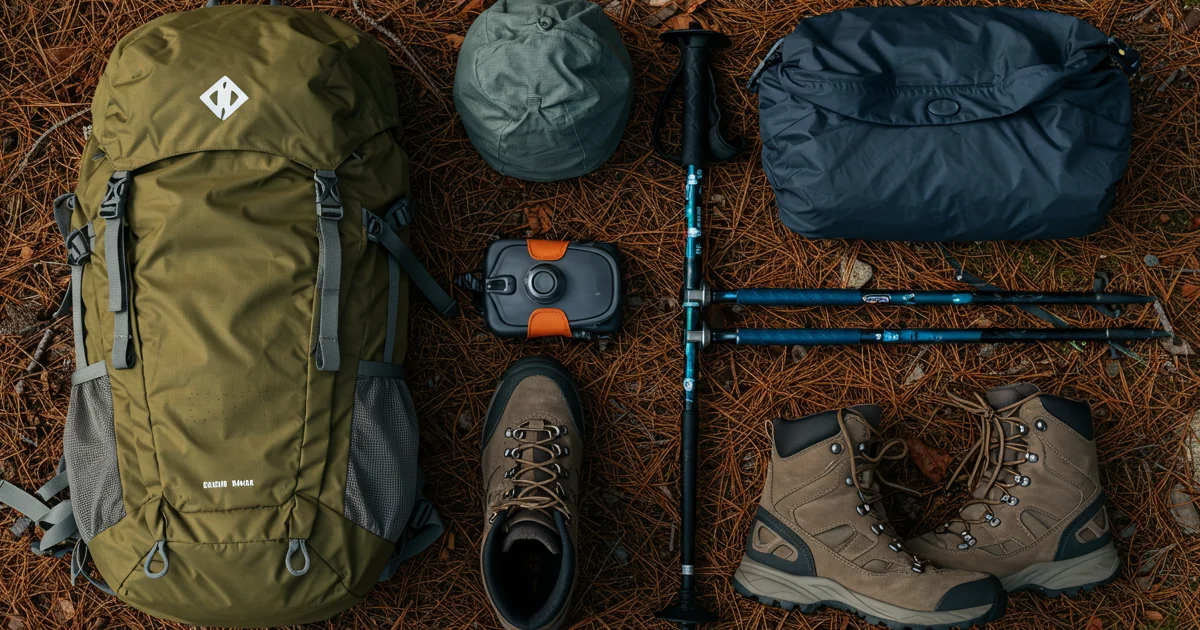
An outdoor brand hub runs gear-comparison affiliate catalogs, trailhead and park geo directories, and geology or species authority pages under one outdoor brand. HVCE keeps each dataset's attribute schema distinct—compare-heavy specs versus map-heavy geo versus concept-level authority—while sharing one domain, one discovery pack, and one hosting bill.