
What this site is
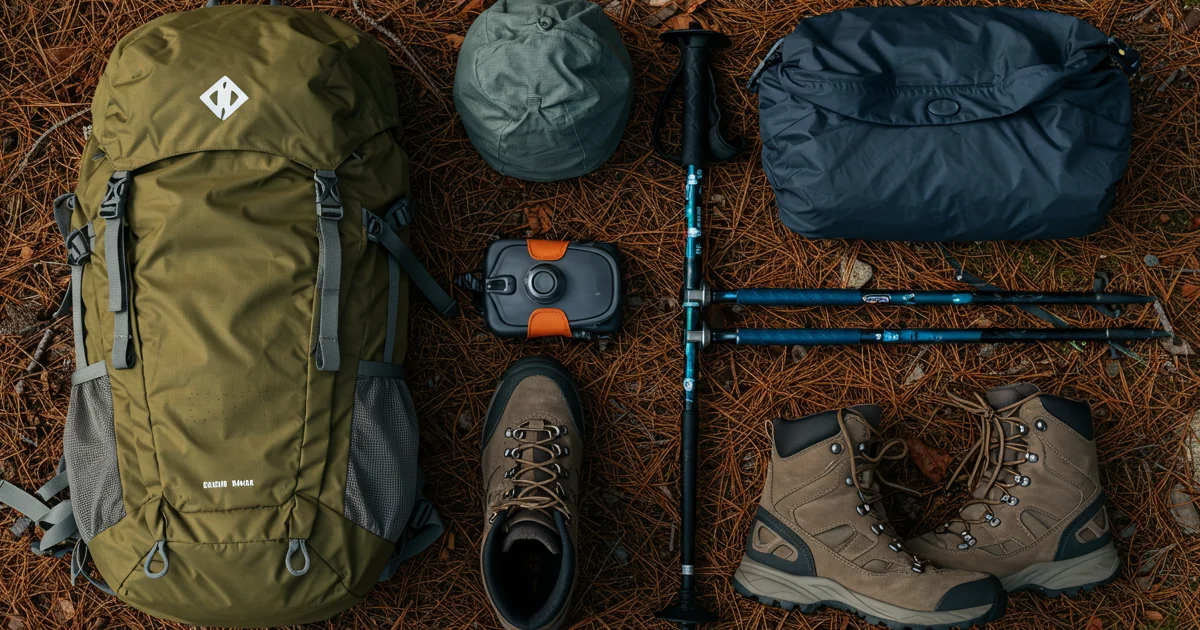
Outdoor brands sell gear, guide visitors to real places, and want to be seen as a trustworthy authority on terrain and wildlife. Those are three different information shapes, and a multi-niche hub lets a brand run all three without forcing gear specs and trail coordinates into the same table.
How the catalog is organized
The affiliate dataset keeps compare-required specs and CTAs; the geo dataset keeps map-required trailhead facets; the authority dataset keeps concept-level geology or species facts with maps mostly off. Shared outdoor category chips connect all three in navigation and internal links without ever merging their underlying attribute schemas.
Why outdoor brands and affiliate operators combine these
A brand that only sells gear looks thin next to one that also explains the terrain and access rules its customers actually care about. Combining affiliate, geo, and authority datasets under one domain builds the topical depth that a single comparison matrix alone cannot achieve for search or AI citation.
Related surfaces
Composes cleanly from hvce site hiking boot comparison hub, hvce site regional trailhead access directory, and hvce site regional hiking geology primer as three separate datasets sharing one domain and brand. See hvce reason automated discovery for how a single discovery pack covers all three simultaneously.
What ships with every page
Every entity across the network is crawlable HTML with its own metadata, structured data aligned to the visible record, and a clean text twin for answer engines—so multi-niche brands stay organized on one domain and legible for search and AI systems.
Metrics
| Typical Catalog Size | 900 entities |
|---|---|
| Profile Depth Score | 4 |
| Facet Dimensions | 8 |
Descriptors
| Primary Monetization | affiliate |
|---|---|
| Discovery Surfaces | seo-aeo-geo |
| Map Suitability | optional |
| Compare Suitability | optional |
| Delivery Mode | either |
| Buyer Persona | affiliate |
| Overlap Cluster | outdoor |
Frequently asked questions
Do the three datasets share attributes?
No—each keeps its own schema; only category chips and internal links connect them.
Is compare available across all datasets?
No—compare stays scoped to the affiliate gear dataset where attribute parity actually supports it.
Why combine authority content with affiliate gear?
Authority content builds trust and citation; affiliate content converts that trust into revenue—together they outperform either alone.
Can a brand start with just one dataset?
Yes—start with the strongest dataset and add the others as content and resources allow.
How does hosting cost scale?
One deployment serves all datasets, so adding a second or third catalog does not multiply hosting cost.
Related in this catalog
-

Indie commerce multi-SKU network
An indie commerce multi-SKU network runs several product-specification affiliate catalogs across unrelated SKU categories—cameras, headphones, hiking boots—under one indie commerce brand. HVCE keeps each category's numeric attribute schema independent while sharing one domain's discovery files, so a small team scales SKU coverage without multiplying engineering work per category.
-

Culture-city multi-catalog hub
A culture-city hub runs venue directories, specialized collections, and landmark or heritage reference pages under one brand and one HVCE deployment. Each dataset keeps its own attribute schema and map toggle while the domain shares one sitemap, one semantic manifest, and one licensed installation—so agencies pitch a full cultural network instead of a single-purpose microsite.
-
Food-city multi-niche hub
A food-city hub runs farmers-market and brewery-trail geo directories beside cheese, wine, or coffee authority reference pages under one food-and-drink brand. HVCE keeps map-heavy geo datasets and concept-level authority datasets independent, so a regional food publisher builds both trip-planning utility and durable reference authority on one domain.
-

Creator desk multi-niche hub
A creator-desk hub runs camera-body, microphone, and headphone specification matrices beside broader gear-buying authority pages under one creator-economy brand. HVCE lets each product category keep its own compare-required attribute schema while sharing one domain's discovery files and one licensed installation for affiliate publishers.