
What this site is
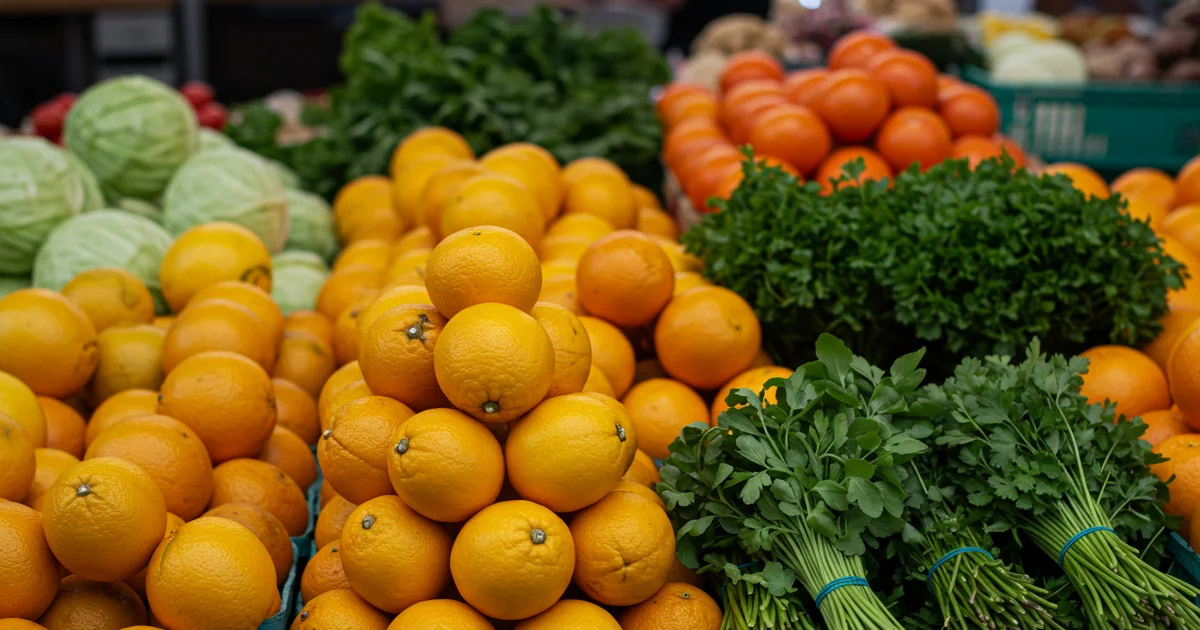
Food publishers want visitors to find real venues nearby and also trust the publisher's grasp of the underlying subject—cultivar facts, PDO designation rules, fermentation science. A food-city hub runs both types of content without collapsing venue addresses and concept definitions into a single confused attribute table.
How the catalog is organized
Geo datasets such as farmers markets and brewery trails keep map-required place facets; authority datasets such as cheese or wine references keep concept-level facets with maps off or optional. Shared food-drink category chips tie the two dataset types together for cross-browse without ever merging their schemas.
Why regional food publishers combine these datasets
A trip-planning directory alone competes mostly on convenience; an authority reference alone competes mostly on depth. Together, a food-city hub earns both local-intent traffic and answer-engine citation, giving a regional publisher a defensible position that a single-purpose site or app simply cannot match.
Related surfaces
Composes from hvce site county farmers market directory, hvce site craft brewery trail directory, and hvce site cheese aoc pdo reference as three independent datasets sharing one brand and domain. See hvce reason organized catalogs for the taxonomy behind combining them cleanly at scale.
What ships with every page
Every entity across the network is crawlable HTML with its own metadata, structured data aligned to the visible record, and a clean text twin for answer engines—so multi-niche brands stay organized on one domain and legible for search and AI systems.
Metrics
| Typical Catalog Size | 700 entities |
|---|---|
| Profile Depth Score | 4 |
| Facet Dimensions | 8 |
Descriptors
| Primary Monetization | mixed |
|---|---|
| Discovery Surfaces | seo-aeo-geo |
| Map Suitability | optional |
| Compare Suitability | off |
| Delivery Mode | either |
| Buyer Persona | publisher |
| Overlap Cluster | food-drink |
Frequently asked questions
Can venues and cheese references share a page template?
No—each dataset keeps its own template and attribute schema; navigation is what ties them together.
Does this need a bigger server?
No—the combined network still runs on the same lean hosting a single dataset would use.
What monetization fits a food-city hub?
Sponsorship on geo listings and affiliate links on authority pages, kept separate and clearly disclosed.
How many datasets is too many?
Add datasets as your editorial capacity allows; quality per entity matters more than dataset count.
Who buys this build?
Regional food publishers, tourism boards, and agencies pitching a full food-and-drink content presence.
Related in this catalog
-
Culture-city multi-catalog hub
A culture-city hub runs venue directories, specialized collections, and landmark or heritage reference pages under one brand and one HVCE deployment. Each dataset keeps its own attribute schema and map toggle while the domain shares one sitemap, one semantic manifest, and one licensed installation—so agencies pitch a full cultural network instead of a single-purpose microsite.
-
Outdoor brand multi-niche hub
An outdoor brand hub runs gear-comparison affiliate catalogs, trailhead and park geo directories, and geology or species authority pages under one outdoor brand. HVCE keeps each dataset's attribute schema distinct—compare-heavy specs versus map-heavy geo versus concept-level authority—while sharing one domain, one discovery pack, and one hosting bill.
-

Creator desk multi-niche hub
A creator-desk hub runs camera-body, microphone, and headphone specification matrices beside broader gear-buying authority pages under one creator-economy brand. HVCE lets each product category keep its own compare-required attribute schema while sharing one domain's discovery files and one licensed installation for affiliate publishers.
-
Agency portfolio demo network
An agency portfolio demo network runs several small dataset demos—one geo directory, one spec matrix, one authority base—on a single HVCE domain as a live sales tool. Prospective clients browse working examples of every dataset shape an agency can deliver, instead of trusting a static case-study PDF.